
Choosing a medical career is a big decision, and selecting the right country for MBBS…
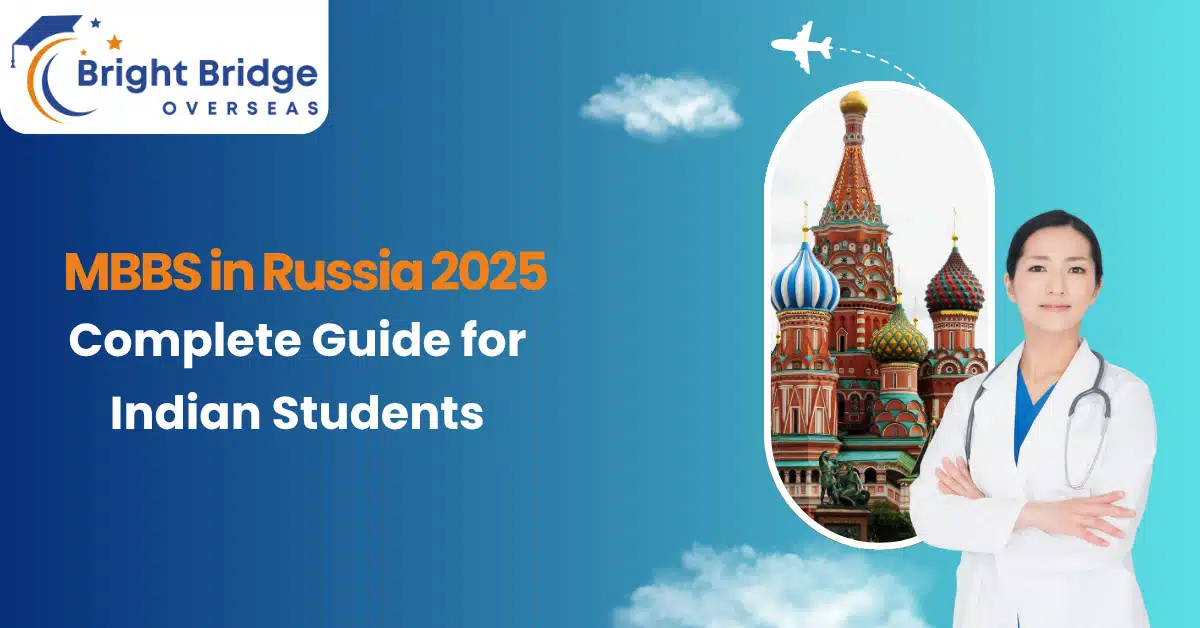
MBBS in Russia has emerged as a trusted and affordable pathway for Indian students who dream of becoming doctors. In 2025, this destination continues to be one of the most preferred choices due to its world-class education, globally recognized degrees, and low-cost structure compared to private medical colleges in India. With a strong legacy of medical training and a large network of Indian alumni, Russia is not just an academic hub but also a culturally welcoming country.
Table of Contents
Why Choose MBBS in Russia in 2025?
- Affordable tuition fees and cost of living
- No entrance exams or donations required (apart from NEET)
- Globally recognized degrees (NMC, WHO, FAIMER listed)
- English-medium instruction in most top universities
- High-quality medical infrastructure and training
- Separate hostels and Indian food availability
- Direct admissions and smooth visa process
Russia has consistently proven to be a reliable country for aspiring medical students, especially from India. The country has over 30 medical universities that are recognized by the National Medical Commission (NMC) and accept Indian students each year.
Eligibility Criteria & NEET Requirements
Academic Eligibility
- Students must have passed Class 12 with a minimum of 50% in Physics, Chemistry, and Biology (PCB). For SC/ST/OBC categories, the minimum requirement is usually 40%.
- The minimum age for admission is 17 years, typically counted as of December 31, 2025.
NEET Requirement
- Clearing NEET is non-negotiable. All Indian students must qualify NEET to be eligible for MBBS admission abroad as well as for further medical practice in India after graduation.
- There’s no fixed NEET cutoff for Russian universities. Top institutions may see successful applicants with scores above 130, while others may accept lower scores. However, a higher NEET score strengthens your chances of gaining admission to preferred universities.
Health & Documentation
- Applicants must submit a medical fitness certificate, including an HIV test report.
- A good moral character declaration, academic transcripts, passport-size photos, and subject-wise mark sheets are essential to complete your application package.
Features of the MBBS Program in Russia
Program Duration & Structure
The standard MBBS course in Russia is six years, divided as follows:
- 5 years of academic study, focusing on theory and clinical exposure.
- 1 year of supervised internship, which is integral for hands-on practical experience.
Language of Instruction
- Most universities offer courses in English, enabling Indian students to adapt quickly.
- However, medical instruction in Russia often requires interaction with patients in Russian. Hence, universities provide basic Russian language training—usually during the first year—to prepare students for clinical rotations.
Exam Standards & Accreditation
- MBBS degrees from Russian universities are recognized by the National Medical Commission (NMC) in India, as well as WHO and FAIMER, which allows for global flexibility.
- Accreditation ensures graduates are eligible to sit for FMGE (Foreign Medical Graduate Examination), and in the future, NExT in India.
Tuition Fees & Total Course Expenses
General Fee Range
- Annual tuition typically ranges from ₹2.5 to ₹5 lakh, depending on the university’s reputation and location.
- Over six years, the overall cost (tuition + hostel) usually totals between ₹15 lakh to ₹30 lakh. Depending on exchange rates and university policies, for premium institutions it may go slightly higher.
University Fee Comparison
| University | Approximate Total MBBS Cost (INR) |
| Omsk State Medical University | ₹8.8 lakh |
| Bashkir State Medical University | ₹14.5 lakh |
| Kazan Federal University | ₹21 lakh |
| Crimea Federal University | ₹17.85 lakh |
| Volgograd State Medical Univ. | ₹25.2 lakh |
| Kursk State Medical University | ₹27.3 lakh |
| Perm State Medical University | ₹18.9 lakh |
Cost of Living in Russia
Monthly Budget Estimated
| Expense Category | Estimated Cost (INR) |
| Hostel Accommodation | ₹4,000 – ₹6,000 |
| Food & Groceries | ₹4,000 – ₹6,000 |
| Utilities & Transport | ₹2,000 – ₹4,000 |
| Miscellaneous Shopping | ₹2,000 – ₹4,000 |
| Total Monthly Estimate | ₹12,000 – ₹20,000 |
- Many medical universities provide Indian messes or access to Indian groceries, helping students enjoy familiar meals.
- Hostels are generally located on or near campus and include security and basic amenities.
Admission Process: Your Step-by-Step Blueprint
University Selection
Shortlist based on tuition, location, teaching medium, hostel facilities, FMGE history, and popularity among Indian students.
Document Preparation
Compile: 10th & 12th mark sheets, NEET scorecard, passport, photos, medical fitness certificate, birth certificate, economic sponsor documents (if needed).
Application Submission
Apply online (or via a trusted consultant like Bright Bridge Overseas).
Admission Letter
Receive from the university, confirms provisional seat.
Invitation Letter
Issued by the Russian Ministry of Education; required for a visa.
Student Visa Application
Apply at the Russian Embassy/Consulate with documents.
Book Travel & Arrival
Book flights and prepare for arrival in line with the university calendar (usually September or February).
Registration
Complete university registration, document verification, and attend orientation.
Commence Course
Start with first-year academics and language learning, followed by clinical years and an internship.
Internship & Indian Licensing
Complete 5 academic years, then a 1-year internship. Return to India and prepare for FMGE or NExT to practice.
Ready to begin your MBBS journey in Russia? Contact Bright Bridge Overseas for expert guidance — from admissions to visa and beyond!

FMGE Performance & Post-Graduation Planning
FMGE Exam (Foreign Medical Graduate Examination)
- Historically, the average FMGE pass rate among Russian MBBS graduates hovers around 25% to 35%.
- Early preparation and disciplined study significantly raise success chances.
- Certain universities now offer FMGE/NExT coaching support during the academic years.
Further Opportunities
- Many graduates pursue postgraduate studies or licensing in countries like the USA (USMLE), UK (PLAB), or continue with NExT in India for clinical practice.
- Some students return to Russia or join PG programs in other countries, depending on goals and credentials.
Visa Process & Travel Essentials
Russian Student Visa Overview
- Join First: Receive university’s invitation, then apply for a Russian student visa at the embassy.
- Documentation Required: Including passport, admission/invitation letters, medical report, HIV test, photos, visa forms, and application fees.
- Processing Time: Usually 5–15 business days, depending on the embassy.
- Validity: Initially valid for 90 days; extended to full course duration once in Russia.
Post-Arrival Requirements
- Register with local authorities within a set timeframe after arrival.
- Visit university authorities to complete documentation and student ID issuance.
- Set up local bank accounts or access essential services for daily life.
Safety, Student Support & Culture
Safety for Indian Students
- Russian university towns are generally safe with low crime levels.
- Security within hostels is common, featuring entry controls and round-the-clock surveillance.
- Local university and student welfare services offer robust support, from counseling to cultural integration.
Cultural Integration & Lifestyle
- Indian students often form strong communities that celebrate festivals like Diwali and Holi together.
- Many urban campuses have Indian messes, cultural clubs, and access to Indian food and groceries.
- Participation in cultural and sports events enhances the student experience and eases homesickness.
Key Tips & Final Advice
- Start NEET preparation early, even while applying overseas.
- Choose wisely, balancing cost, academic quality, and FMGE track record.
- Apply early—especially for the popular September intake.
- Include contingencies like airfare, visa fees, and initial expenses in your budget.
- Engage in FMGE prep throughout your study to build competency early.
- Keep learning basic Russian for effective patient interaction during clinical years.
- Use student networks for sharing resources and guidance.
Conclusion
Choosing to pursue an MBBS in Russia in 2025 offers Indian students a world-class medical education that’s both internationally recognized and financially viable. With a systematic approach to eligibility, university selection, visa process, and exam preparation, you can confidently navigate your way to a successful medical career.
If you’d like help with university-specific profiles, downloadable guides, or city comparisons, Bright Bridge Overseas is here to support your journey every step of the way. Let’s convert your MBBS dream into reality—together.
Explore Top Destinations for Studying MBBS Abroad!
Related Posts